

In modern society, daily life is increasingly defined by urbanization, constant digital connectivity, and persistent cognitive demands. People spend the vast majority of their lives indoors, staring at illuminated screens and processing an unceasing influx of information. While this technological evolution has increased efficiency, it has also triggered a parallel surge in psychological distress, leaving millions of individuals navigating chronic daily anxiety.
Faced with the limitations and side effects of relying solely on conventional stress management techniques, clinical psychologists and researchers have increasingly looked back toward the natural world. Nature therapy, also known as ecotherapy or green exercise, has emerged as a scientifically validated intervention for psychiatric well-being. By intentionally engaging with natural environments, individuals can trigger profound biological changes that calm the nervous system, disrupt anxious thought patterns, and restore emotional resilience.
The Science of Stress Reduction in Green Spaces
To understand how nature therapy mitigates daily anxiety, it is necessary to examine the autonomic nervous system. When you experience anxiety, your body activates the sympathetic nervous system, often referred to as the fight or flight response. This evolutionary survival mechanism floods the bloodstream with stress hormones like cortisol and adrenaline, increasing the heart rate, elevating blood pressure, and sharpening vigilance.
While this response is helpful when facing immediate physical danger, chronic activation due to modern psychological stress wears down the body and brain. Immersing oneself in a natural setting works as a direct countermeasure by stimulating the parasympathetic nervous system, which governs the rest and digest functions.
Clinical studies tracking physiological markers demonstrate that spending time in green spaces causes an immediate drop in salivary cortisol levels, a reduction in blood pressure, and a stabilizing of heart rate variability. The brain interprets the organic structures, gentle movements, and open spaces of nature as inherently safe, signaling the endocrine system to cease the production of stress hormones and allowing the body to return to a state of biological equilibrium.
The Biophilia Hypothesis and Attention Restoration Theory
The therapeutic value of the natural world is supported by two primary psychological frameworks: the biophilia hypothesis and attention restoration theory. These concepts explain why human biology is fundamentally wired to thrive in natural settings.
The biophilia hypothesis suggests that because humans evolved in direct communion with nature over hundreds of thousands of years, we possess an innate biological affinity for the natural world. Our sensory systems are optimized to interpret natural signals rather than concrete landscapes and artificial lights. When we are completely isolated from nature, we experience a form of evolutionary dissonance that manifests as chronic, low-grade psychological tension.
Attention restoration theory focuses on cognitive fatigue. Modern work and urban environments require directed attention, a highly exhausting cognitive process that forces the brain to filter out constant distractions. When directed attention is overused, cognitive fatigue sets in, making an individual highly susceptible to irritability, brain fog, and intense anxiety.
Nature, by contrast, invokes soft fascination. The gentle movements of wind through leaves, the shifting patterns of clouds, and the flow of water capture the brain’s attention effortlessly without requiring active cognitive strain. This allows the prefrontal cortex, the seat of executive function and emotional regulation, to rest and fully replenish its energy reserves.
Shinrin-Yoku and the Power of Phytoncides
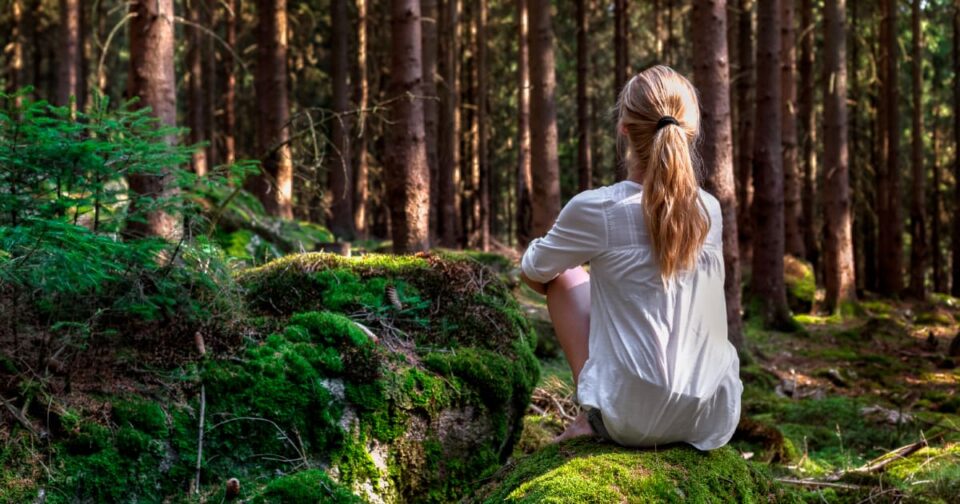
One of the most popular and structured forms of nature therapy practiced globally is Shinrin-Yoku, a Japanese term that translates literally to forest bathing. Developed in the 1980s as a public health response to corporate burnout, forest bathing does not involve vigorous hiking or physical exertion. Instead, it emphasizes slow, deliberate immersion in a forest environment while consciously engaging all five senses.
Beyond the mental distraction, forest bathing introduces a unique chemical benefit via airborne organic compounds called phytoncides. These antimicrobial chemicals are released by trees, particularly conifers like pines, cedars, and oaks, to protect themselves from insects and disease.
When humans inhale these forest aerosols during a nature therapy session, the compounds interact positively with our immune and neurological systems. Exposure to phytoncides has been shown to significantly increase the activity of natural killer cells, which are crucial components of our immune defense, while simultaneously reducing the expression of genes associated with inflammation and anxiety in the brain.
Breaking the Cycle of Rumination
A foundational component of generalized anxiety disorder and daily stress is rumination, which is the habit of repetitively focusing on negative thoughts, past mistakes, or catastrophic future predictions. Rumination acts as a self-reinforcing loop, where anxious thoughts trigger physical discomfort, which then fuels further anxious thinking.
Nature therapy effectively breaks this cycle by pulling an individual out of their internal narrative and anchoring them in the physical present. The sheer sensory variety of an outdoor space encourages an external locus of focus.
-
Visual Grounding: Observing the intricate, non-repeating geometric patterns found in ferns, shorelines, and tree branches, known as fractals, has a measurable soothing effect on human brain wave activity.
-
Auditory Calming: Listening to natural sounds, such as birdsong or rustling leaves, suppresses the activity of the amygdala, the brain area responsible for processing fear and threat detection.
-
Tactile Connectivity: Physically interacting with the environment, whether walking barefoot on grass or feeling the texture of tree bark, enhances proprioceptive awareness, helping to calm a racing mind.
Integrating Ecotherapy Into a Modern Routine
You do not need to relocate to a remote wilderness area to access the psychological benefits of nature therapy. The positive impacts on anxiety can be achieved through accessible, micro-dose interactions with the natural world built into a standard weekly routine.
A highly effective strategy is the twenty-minute nature rule. Research indicates that spending just twenty to thirty minutes sitting or walking in a setting that provides a clear connection to nature, such as a tree-lined city park, significantly drops cortisol levels.
Urban planners and mental health advocates suggest incorporating green exercise into your routine, which involves moving physical activities like jogging, yoga, or stretching out of indoor gyms and into natural environments. By replacing a treadmill session with a park run, you combine the endorphin release of physical exercise with the attention-restoring benefits of green spaces, creating a powerful dual intervention against daily anxiety.
Frequently Asked Questions
What should I do if my local urban area lacks large parks or forests?
You can practice micro-dosing nature therapy even in highly dense urban centers. Visiting small community gardens, sitting near public fountains, tending to indoor houseplants, or simply spending time looking out a window at a patch of sky or trees can provide notable cognitive relief and reduce baseline anxiety scores.
How does weather affect the efficacy of nature therapy for anxiety?
Nature therapy does not require perfect, sunny conditions to be effective. Engaging with nature during rainy, overcast, or winter conditions offers unique sensory inputs, such as the sound of rainfall or the stillness of snow, which can enhance mindfulness. Dressing appropriately for the weather ensures physical comfort, allowing the brain to focus on the environment rather than temperature discomfort.
Can watching nature documentaries or looking at photos provide similar anxiety relief?
Virtual nature exposure, such as viewing high-definition landscape photography or listening to recorded forest sounds, can serve as a helpful temporary substitute when physical access is impossible. While it does lower heart rates and ease acute stress, studies show it is less effective than physical outdoor immersion, which engages all five senses and includes biochemical factors like fresh air and sunlight.
Is nature therapy meant to completely replace traditional anxiety medications or talk therapy?
Nature therapy is designed to be a complementary, integrative intervention rather than a total replacement for established psychiatric care. For severe clinical anxiety, it works best when combined with cognitive behavioral therapy and prescribed medications, providing a natural, daily coping mechanism that reinforces clinical treatments.
How does the concept of grounding or earthing relate to nature therapy?
Grounding, or earthing, refers to the practice of walking barefoot directly on natural surfaces like soil, grass, or sand. Proponents suggest that direct physical contact with the earth allows for the transfer of natural electrical charges that can reduce internal inflammation and improve sleep quality, further supporting the overall anxiety-reducing goals of ecotherapy.
What is the primary difference between a standard outdoor hike and a nature therapy session?
A standard hike typically focuses on physical fitness, distance goals, or reaching a specific destination, which can sometimes maintain a subtle level of goal-oriented performance stress. A nature therapy session prioritizes presence over pace, encouraging participants to move slowly, stop frequently, and focus entirely on sensory perception rather than physical output.
