

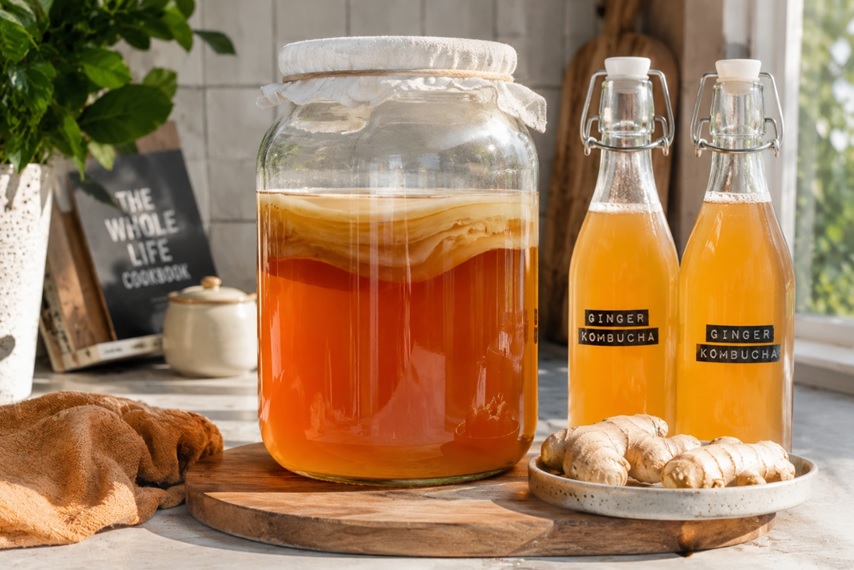
It’s hard to walk through a café, bottle shop, or supermarket in Australia these days without spotting a bottle of kombucha somewhere on the shelf. This fizzy, tangy fermented tea has gone from health-food curiosity to mainstream staple in a remarkably short space of time, and a growing number of people are now choosing to brew their own rather than buying it pre-made.
This guide covers the fundamentals: what kombucha actually is, how the fermentation process works, and what’s involved in brewing a batch at home.
What Exactly Is Kombucha?
Kombucha is a fermented tea, traditionally made by combining sweetened black or green tea with a symbiotic culture of bacteria and yeast, commonly known as a SCOBY (which stands for symbiotic culture of bacteria and yeast). Over a period of roughly one to two weeks, this culture consumes the sugar in the sweetened tea, producing a tangy, lightly carbonated drink in the process.
The result is a beverage with a distinctive sour-sweet flavour profile, often described as somewhere between sparkling apple cider vinegar and a light, fizzy soft drink, depending on how it’s brewed and flavoured.
Where Australia Fits into the Kombucha Story
Kombucha Australia wide has seen remarkable growth over the past decade, moving from a niche, somewhat fringe product into something stocked by mainstream supermarkets and brewed in countless home kitchens. Local cafes increasingly stock house-made kombucha on tap, and farmers’ markets across the country often feature small-batch producers selling unique flavour combinations.
This growth mirrors a broader cultural shift towards fermented and gut-friendly foods generally, but kombucha’s approachable flavour and refreshing, lightly fizzy character have made it a particularly easy entry point compared to more acquired tastes like sauerkraut or kimchi.
Understanding the SCOBY
The SCOBY is, understandably, the part that intimidates most beginners. It’s a rubbery, pancake-like disc that floats on top of the brewing tea, and while it might look unusual, it’s simply the visible byproduct of the bacteria and yeast culture doing its job.
A healthy kombucha scoby should be relatively firm, cream or light brown in colour, and free from any fuzzy mould growth (which would appear as raised, fuzzy patches rather than the smooth, slightly bumpy texture of a healthy culture). Most beginners source their first SCOBY from an established brewer or as part of a dedicated starter kit, since growing one entirely from scratch takes considerably longer and carries more risk of contamination.
The Basic Brewing Process
Brewing kombucha at home generally follows a consistent sequence. Sweetened tea is brewed and cooled to room temperature, since adding the SCOBY to hot tea can damage or kill the culture. The cooled tea is then combined with the SCOBY and a portion of previously brewed kombucha (often called the starter liquid), in a clean glass vessel covered with breathable cloth rather than a sealed lid.
From there, it’s largely a waiting game. The brew sits at room temperature for somewhere between seven and fourteen days, depending on ambient temperature and personal taste preference. Warmer conditions speed up fermentation considerably, which is particularly relevant given how much temperature varies across different parts of Australia throughout the year.
Once the first ferment reaches the desired tartness, many home brewers move on to a second ferment, bottling the kombucha with added fruit, ginger, or herbs to build carbonation and additional flavour before refrigerating.
Setting Up a Reliable Home Brewing Routine
Consistency matters enormously when brewing kombucha, and that starts with sourcing a reliable culture. For anyone starting out, choosing organically sourced kombucha Australia suppliers tends to produce more consistent, healthier cultures from the outset, reducing the trial and error that often comes with lower-quality starter kits.
It’s also worth setting up a dedicated brewing space, somewhere reasonably stable in temperature, out of direct sunlight, and away from other fermentation projects to avoid any risk of cross-contamination between different cultures, such as kefir grains or sourdough starters being kept in the same kitchen.
Choosing a Starter Kit vs Building One Piece by Piece
Beginners generally fall into one of two camps: those who prefer a complete, ready-to-go starter package, and those who’d rather source individual components themselves. A well-assembled kombucha kits option tends to be the more straightforward route for first-timers, typically including the SCOBY, starter liquid, brewing vessel, and clear instructions in one package.
More experienced fermenters, or those already comfortable with other home fermentation projects, often prefer sourcing components separately, allowing more control over the specific tea blend, sugar type, and brewing vessel used.
How Kombucha Fits Into the Bigger Gut Health Picture
Kombucha’s popularity has grown alongside broader interest in fermented foods and probiotics generally, given that the brewing process produces live cultures similar in concept, though different in specific strain composition, to those found in other fermented products using fermentation kits. Many people who start brewing kombucha find themselves naturally curious about other home fermentation projects soon afterwards, since the underlying skills and equipment often overlap considerably.
It’s worth noting that commercial kombucha and homebrewed kombucha can vary significantly in live culture content, alcohol level (a small amount is naturally produced during fermentation), and sugar content, depending on how each batch is brewed and bottled.
Troubleshooting Common Kombucha Problems
Most kombucha brewing problems fall into a handful of predictable categories, and recognising them early saves a lot of wasted batches. A SCOBY that sinks to the bottom isn’t necessarily a problem on its own, though it’s often a sign that fermentation is progressing more slowly than usual, perhaps due to cooler ambient temperatures.
A genuinely concerning sign is fuzzy mould growth on the surface, which looks distinctly different from the normal, slightly bumpy texture of a healthy SCOBY or the harmless brown yeast strands that often form during fermentation. Mould requires the whole batch, SCOBY included, to be discarded rather than salvaged, since mould can produce mycotoxins that brewing won’t neutralise.
Over-fermentation is a more common, less serious issue, usually resulting in an overly vinegary, sharp-tasting batch. While not harmful, it’s simply less pleasant to drink, and noting brewing times against the resulting flavour helps most brewers dial in their preferred timing within a batch or two.
Second Fermentation: Where the Fun Really Begins
Once the basic first ferment is mastered, many home brewers move on to second fermentation, which is really where kombucha becomes a creative outlet rather than just a routine brewing task. Bottling the first-ferment liquid with fresh or frozen fruit, ginger, herbs, or even spices introduce new flavour dimensions while also building natural carbonation as the remaining yeast continues working in the sealed bottle.
This stage typically takes anywhere from one to three days at room temperature before bottles are moved to the fridge to slow fermentation and lock in carbonation. It’s worth using bottles specifically designed to handle pressure, since standard glass jars aren’t built for the build-up of carbon dioxide that occurs during a well-carbonated second ferment.
Final Thoughts
Kombucha has earned its popularity in Australia for good reason, it’s refreshing, endlessly customisable, and surprisingly approachable once you understand the basic fermentation principles behind it. What seems intimidating at first, particularly the SCOBY itself, quickly becomes second nature once you’ve brewed a batch or two.
Whether starting with a complete kit or building a setup piece by piece, the fundamentals remain the same: clean equipment, quality ingredients, patience, and a willingness to taste-test along the way. For anyone curious about home fermentation, kombucha remains one of the most rewarding and forgiving places to start.
