

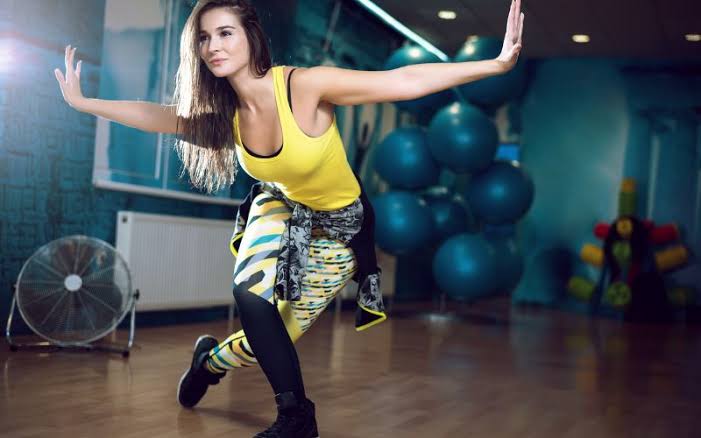
A full studio can create energy and group momentum, but it also changes how participants step, turn and respond to choreography. During popular zumba classes singapore, footwork quality depends on using space efficiently rather than attempting the largest possible version of every movement.
Crowding becomes a technical issue when participants shorten steps unpredictably, avoid neighbours at the last moment or lose sight of the instructor. A few deliberate adjustments can preserve rhythm without reducing the class to minimal movement.
Claim a Realistic Movement Area
Participants should identify the usable space around them before the class becomes fast. The area needs to include room for lateral steps, forward and backward movement, and arm patterns.
This does not mean creating an unnecessarily large personal zone. It means understanding the boundaries within which movement can remain consistent.
A predictable small area is easier to manage than changing range every time another person moves nearby.
Reduce Travel, Not Rhythm
Many Zumba patterns can be performed with less distance while retaining the beat and direction. A four-step lateral sequence can remain compact rather than crossing a large part of the floor.
The participant still changes weight and follows the choreography. The reduction occurs in travel distance, not engagement.
Compact movement is particularly useful near walls, columns or equipment storage areas.
Keep the Feet Closer to the Body
Large reaching steps require more room and take longer to reverse. In a crowded studio, they can cause late transitions and awkward recovery.
Shorter steps keep the centre of mass more controlled. Participants can respond to the next direction change without pulling the foot back from an extreme position.
Intensity can be maintained through purposeful arm movement and consistent rhythm.
Use a Forward-Facing Option for Turns
Turns require both rotational space and a clear view of the surrounding area. When these are limited, the participant can step in place or change direction without completing the full rotation.
This preserves the timing while reducing collision risk. It also helps participants who lose sight of the instructor during turns.
A forward-facing modification should be treated as a normal class option, not a last-minute mistake.
Protect Lateral Sightlines
Participants naturally focus on the instructor, but peripheral awareness matters in a full room. Large side steps and arm movements can enter another person’s space.
A brief awareness of nearby movement does not require constantly looking away from the front. Stable positioning and predictable range make the room easier for everyone to share.
Participants should avoid sudden diagonal travel that is not part of the demonstrated sequence.
Staggering Improves Visibility
Standing directly behind another participant can block the lower-body demonstration. A slightly staggered position may provide a clearer view of the instructor’s feet.
This reduces delayed reactions. Participants who can see the setup are less likely to guess the direction and then correct abruptly.
Facilities can support this by using floor markers or layout guidance where appropriate.
Do Not Rush to Catch Up
Losing one or two beats is normal. Attempting several rapid steps to rejoin the group can reduce foot placement accuracy.
The participant can simplify the movement, regain the rhythm and re-enter at the next repeated phrase. Zumba routines often provide opportunities for this reset.
Controlled re-entry is safer and less mentally tiring than chasing the sequence.
Arm Range Should Match Available Space
Wide arm sweeps can make even stationary footwork require a large area. Participants should adjust arm range when people are close.
The arms can remain active with bent elbows or a smaller path. This preserves whole-body involvement without risking contact.
Reduced arm range may also help when footwork requires greater concentration.
Fatigue Makes Space Management Harder
As participants tire, awareness narrows and movement becomes less precise. Step length may increase or decrease without intention.
Later tracks may therefore require more conservative spacing than the warm-up. Participants should not assume that a movement range used early will remain appropriate throughout the class.
A smaller option can be selected before collisions become likely.
Footwear Still Matters
Crowding may cause participants to stop, pivot or change direction suddenly. Shoes should provide enough stability for these adjustments without gripping the floor so strongly that turning becomes difficult.
Highly cushioned soles may also make fast corrections less stable for some people. The correct choice depends on the floor and the individual.
Footwear should be tested during dance movement rather than judged only by appearance.
Instructor Cueing Supports Shared Space
Early directional cues allow participants to prepare instead of reacting suddenly. Clear demonstrations of compact options also make the room safer.
At True Fitness Singapore, instructors can guide members towards movement ranges that fit the studio layout while maintaining the character of the routine.
Participants should use those options according to the space around them.
Good Footwork Does Not Require Maximum Travel
Zumba footwork remains effective when weight transfer, rhythm and direction are controlled. Large movement can increase intensity, but only when the space supports it.
In a crowded Singapore studio, compact steps, reduced turns and predictable positioning allow the whole group to move more confidently. The objective is not to occupy the most floor area. It is to complete the choreography with enough control to remain consistent from the first track to the last.
